Interreg POCTEFA 2021–2027
Data-driven polymerization for a sustainable future
REMAP combines polymer science, machine learning and renewable raw materials to improve production and accelerate high bio-based-content materials.
REMAP
From data to materials
Bio-based
Machine
learning
Sustainable
materials
A cross-border research project
Building a smarter path from renewable feedstocks to high-performance polymers
Bio-based polymers can reduce dependence on fossil resources, but scaling them without compromising performance remains a major scientific and industrial challenge.
REMAP brings together complementary expertise in monomer synthesis, polymer chemistry, machine learning, pilot production and industrial validation.
Objective: shorten the route from renewable feedstocks to high-performance polymers. Expected results: new bio-based monomers and polymers, predictive machine-learning tools, pilot-scale production and application prototypes validated at TRL 5.
How REMAP worksThree connected research lines
One integrated approach
Scientific knowledge, predictive tools and industrial testing are developed together from the outset.
Bio-based monomers
New renewable building blocks derived from second-generation biomass.
Machine learning
Predictive models that connect molecular structure, process conditions and material performance.
Sustainable materials
Promising formulations scaled to pilot production and validated in real applications.
4
cross-border partners
36
months of collaboration
TRL 5
target validation level
2026–2029
project duration
The consortium
Science across borders




Latest updates
News from REMAP
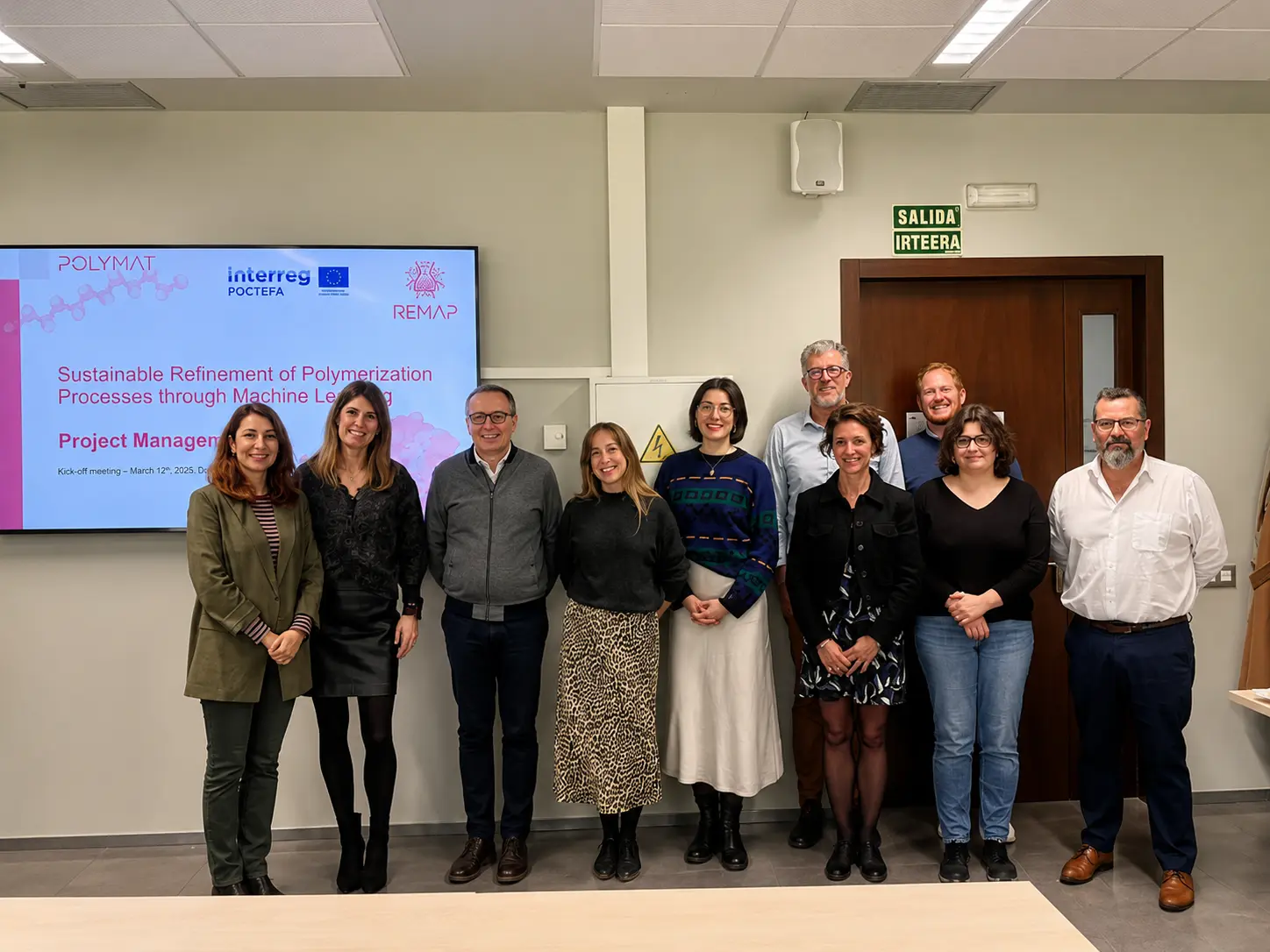
REMAP Project Kick-off in San Sebastián
The four REMAP partners met in San Sebastián to launch a three-year collaboration on data-driven, sustainable polymer production.
Read articleConnect with REMAP